

Can you clarify the wild salmon?
Alaska, the largest state in the United States, accounts for one fifth of the total area of the United States. It shares the second longest river system in North America with Canada and has more than half of the coastline of the United States.
Several rivers flow into the Bering Strait and the Gulf of Alaska, where more than 400 species of fish, shellfish, shrimps, crabs and mollusks live in cold, nutrient-rich waters.
Therefore, Alaska's fishery output ranked first in the United States for 20 consecutive years. In 2016, Alaska's fishing volume accounted for 58% of the United States. Alaska produces about 90% of all commercial Pacific salmon in North America.
The five Pacific salmon species, chinook, chum, coho, sockeye and pink, lay eggs in Alaska waters. If Alaska were an independent country, it would be the world's largest source of wild salmon.
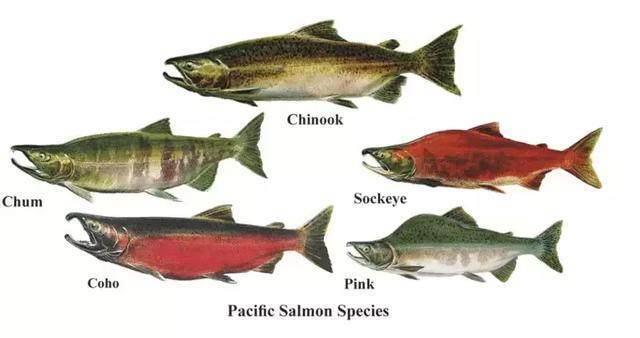
King Salmon
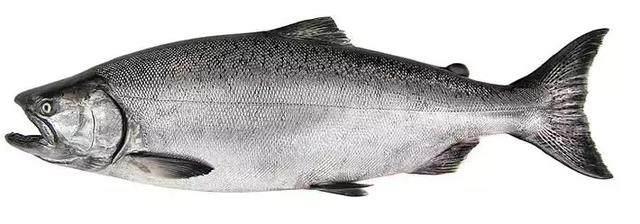
Oncorhynchus tshawytscha, also known as Chinook/King Salmon, is the largest Pacific salmon species with spots on its back and tail. Some of them can weigh up to 100 pounds (about 45 kg), but most of them weigh less than 50 pounds, with an average weight of 20 pounds (about 9 kg) and a length of 30-40 inches (about 76-101 cm). The largest king salmon caught at present is 147 cm long and 57 kg heavy.
King salmon is the most advanced of all salmon species, and its natural fish oil content is significantly higher than that of other salmon. Red but not as bright as salmon, with distinct texture, tender meat, full taste, delicious and rich taste, it is generally sold in the form of whole fish, fish steak or fillet.
Of course, the best way to eat high-quality king salmon is thorn body, but because of its high oil content, micro-frying, baking and other cooking methods can stimulate its characteristics.
Sockeye
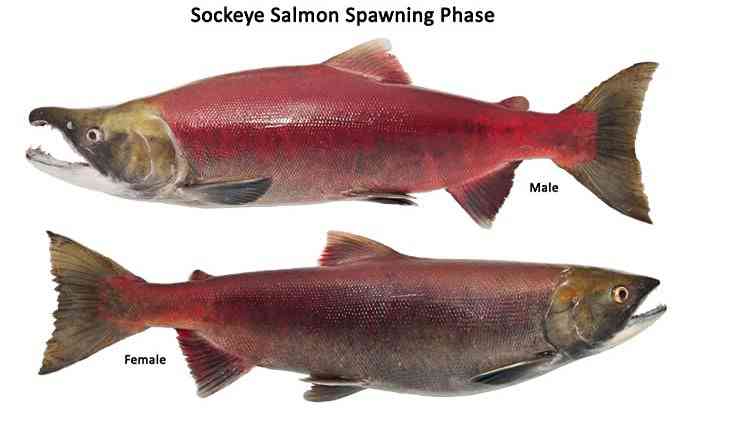
Oncorhynchus nerka, English name Sockeye/Red Salmon. Small size, no spots on tail and back. The average weight is about 6 pounds (2.7 kg) and about 25 inches (63 cm) long. It is the second most productive of the five Pacific salmon species.
The flesh of salmon is compact, bright red in color, high in fat content and rich in flavor. Throughout the cooking process, the bright red color remained unchanged. Generally sold as whole fish, steak or fillet, there are also canned and bagged.
Silvery salmon

Oncorhynchus kisutch, English name Coho/Silver Salmon, has spots on the back and upper leaves of the tail and is of medium size. It is second only to King Salmon in five Pacific salmon species, with an average weight of 12 pounds (5.4 kg) and a length of 25-35 inches (63-89cm).
The flesh of silver salmon is nearly orange-red in color, delicate in taste, compact in meat quality and lower in fat content than that of King Salmon and red salmon. Many people think that salmon is the best choice for grilling.
Dog salmon
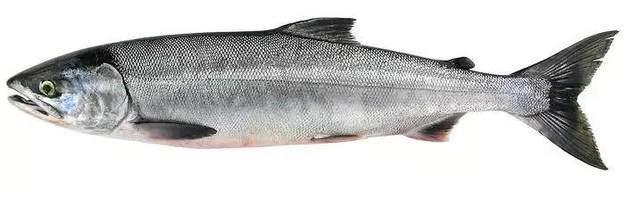
Oncorhynchus keta, English name Chum/Dog Salmon, also known as autumn salmon, has no spots on the back and tail. The average weight is 8 pounds (3.6 kg) and the length is 25-27 inches (63-68 cm).
Salmon meat is pink, compact and suitable for smoking. Because of its low fat content, it is recommended to reduce cooking temperature.
In addition, the salmon seeds are full and colorful. Generally, the salmon seeds we eat come from salmon.
Pink salmon
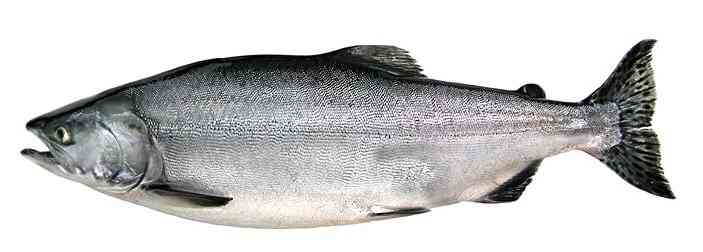
Pink salmon Oncorhynchus gorbuscha, English name Pink/Humpy Salmon, also known as hunchback salmon, has black spots on the back and large oval spots on the tail. Pink salmon is the most productive Pacific salmon and the smallest, with an average weight of 2-3 pounds (0.9-1.4 kg).
Pink salmon is pink, light in color and light in taste. Because of its high yield and economy, it is often made into seasoning products or canned salad, which is the best choice for mixing salad.